
Nuclear test at Bikini Atoll 1946
The dangers of nuclear radiation have not disappeared anywhere, although they are not talked about as much today. The first atomic bomb designed by the physicist Oppenheimer was detonated in the New Mexico desert on July 16, 1945. A little later, the bombs that killed hundreds of thousands of people in a hellish firestorm were dropped on Japan’s Hiroshima and Nagasaki. The first electricity-producing nuclear reactor, EBR, started up in the United States in 1951. Nuclear bombs and nuclear power plants have always been connected to each other. The same large companies, such as the French Areva and the Russian Rosatom, manufacture both nuclear power plants and nuclear bombs. The same uranium mines sell uranium for nuclear weapons and nuclear power plants. The plutonium produced as nuclear waste from nuclear power plants is used for nuclear bombs. The modern environmental movement was born from the movement against nuclear tests. Terrible nuclear tests were carried out in the Pacific Ocean, Siberia, etc., as a result of which entire islands were destroyed and numerous people died from the consequences of radiation. Radioactive material is still stored on many islands. The major powers were even so afraid of environmental activists that French agents blew up Greenpeace’s Rainbow Warrior ship in New Zealand on July 10, 1985. One person died in the attack.
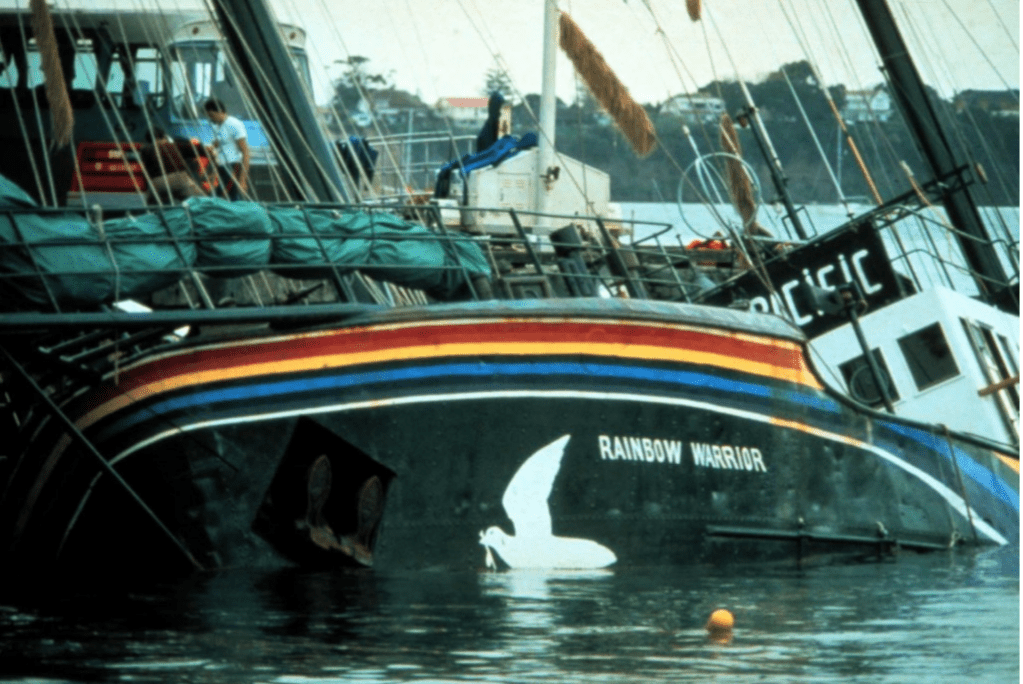
Rainbow Warrior submerged in a harbor in New Zealand
On the night of April 26, 1986, in the Ukrainian Soviet Socialist Republic near Kiev, a devastating explosion occurs in the reactor of the Chernobyl nuclear power plant, followed by a rapidly spreading fire. A huge column of ghostly purple light, miles high, rose over Chernobyl, caused by dangerous beta radiation. A similar, but dimmer halo of light is commonly observed over nuclear power plants, as they all leak beta particles into the atmosphere. Hundreds of people died directly in the accident, but the deadliest were its consequences and numerous cancer deaths. According to research by the New York Academy of Science, the Chernobyl accident has caused the death of at least 985,000 people. Greenpeace has estimated that there were at least 200,000 dead. Chernobyl still causes cancer deaths in the former Soviet Union. The price of the accident is calculated to be hundreds of billions of dollars. Today, there is an area of tens of kilometers around Chernobyl, where access is still prohibited due to high radioactive readings, and a huge concrete structure has been built on top of the power plant itself to prevent the spread of radiation. In 1979, a serious nuclear accident occurred in Harrisburg, USA, on Three-Mile Island, when the reactor melted down. Cancer and children’s deformities still occur in the area. There was a nuclear waste reprocessing plant called Majak in Kystymi, Russia, where a serious explosion occurred in 1957, which caused the evacuation of 10,000 people. The area is still, like Chernobyl, a no-go zone. Even from Finland’s Loviisa nuclear power plant, nuclear waste was taken to Majak for processing. In 2011, the Fukushima accident occurred in Japan, where the tsunami caused by the Tōhoka earthquake swept over the nuclear power plant, causing the cooling system to fail and the three reactor cores to overheat and melt. The area is isolated and access is prohibited due to high radioactivity. 160,000 people were evacuated from the area and huge amounts of water and land had to be cleaned. It is estimated that the accident has caused more than 200 billion dollars in costs so far.

Chernobyl’s abandoned amusement park no go zone

Abandoned gas masks at a school in the Chernobyl area
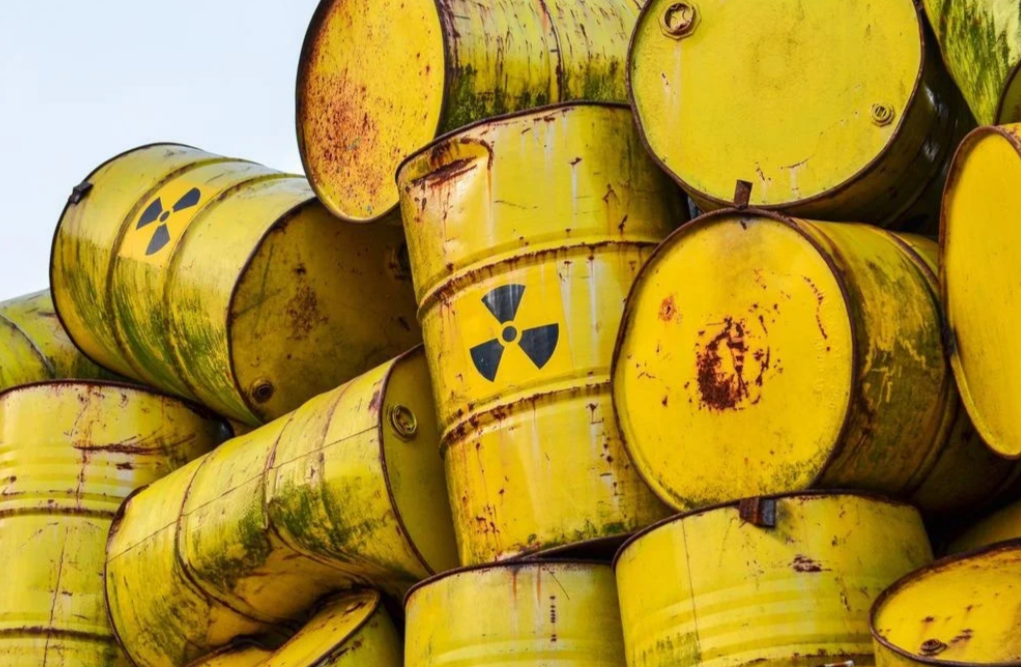
Nuclear power is always associated with the risk of a major accident. Accidents may happen rarely, but when they do, the consequences are extremely serious and affect even millions of people. There could be a million or more dead. Chernobyl’s toxic radioactive isotopes rained down as far as Western Finland, where eating some mushroom species is still prohibited due to their radioactivity. Mushrooms absorb a lot of water and the radionuclides dissolved in it are often enriched in them. The four aforementioned nuclear disasters have occurred every 10-20 years and have caused immense human suffering and enormous economic losses. Nuclear accidents are also possible in connection with the transportation, processing and final disposal of nuclear waste. The final placement has not even been decided yet. Only in Finland is there a ”Cave” in Olkiluoto, where nuclear waste is buried under copper, lead, concrete and rubble for 200,000 years. Even then, the nuclear waste will eventually be toxic lead, which uranium and also the nuclear waste will slowly turn into. The final disposal of nuclear waste is extremely expensive and there are very few suitable places for final disposal. For example, nuclear waste cannot be disposed of in earthquake-prone areas. Nuclear waste from the 60s is still stored in barrels in the area of nuclear power plants. There are currently 88,000 tons of nuclear waste, and about 2,000 more tons are added every year. In tiny Finland, up to 70 tons of nuclear waste is generated every year. Also, all parts of the nuclear power plant, such as the reactor floor, etc., are so contaminated by radioactive radiation that they have to be disposed of in caves. When the nuclear power plant is decommissioned, the area is so polluted that it becomes a no-go zone for the duration of the disaster. Nuclear power is not hi tech, but 60-year-old technology and completely absurd. The safety of nuclear power plants has not improved much and they are still largely the same technology from the Cold War era. Nuclear power requires a huge amount of materials and minerals, condensate pipes are tens of kilometers long, so are power lines, thousands of electronic components are required and rare earth metals are used in them. A nuclear power plant actually uses much more rare earth metals, such as zirconium, than, for example, renewable energy or other cutting-edge technology requires. Every year, millions of fish are absorbed into the condensate water system of nuclear power plants, which are fried to death when the condensate water is used to cool the reactor. In Olkiluoto alone, there are more than 10 million dead fish per year.

Doll in Chernobyl
The fission reaction of uranium in nuclear power plants produces deadly radioactive substances, gamma radiation, and alpha and beta radiation. They are not only poisonous but also highly charged and contain a lot of energy, which is why they break the atomic structure of DNA and thus cause poisoning, radiation sickness, cancer and deformities in children. Likewise, the concentrations of uranium dug in uranium mines are so high, especially when it is enriched, that when it spreads as dust in the air and soil and dissolves in water, it pollutes and makes people in the vicinity of the mine sick. India’s Jadugora is one of the saddest examples, where former uranium mines have leaked uranium and other radionuclides, sickening thousands and causing numerous horrific deformities in children.

Deformed girl Jadugora, India

The world’s largest uranium mine Rössing, Namibia
Uranium mines are modern colonialism. They are usually established on the lands of poor people, indigenous peoples and small farmers, where they pollute people’s habitat, breathing air, drinking water and farmland. In particular, uranium mines are established in the Global South, such as Africa, India and Kazakhstan. In Australia, mines are established on Aboriginal lands, and in Canada on Native American lands. There is no closed system, says the law of thermodynamics. That is, mines always leak into their surroundings and these wastes can never be completely cleaned. Uranium mines always pollute groundwater and surface water, air and soil. Uranium always dissolves in water and ends up in the drinking and washing water of people in the vicinity. Uranium mines are almost always open pits where uranium-rich rock is blasted and thus uranium dust ends up in people’s breathing air. Uranium slowly decays over billions of years into other radionuclides, which are equally dangerous, for example, dangerous radon gas is always found in connection with uranium mines, and spreads from there into the air that people breathe. Along with uranium, other radionuclides dissolve in water. Uranium turns slowly over millions of years into lead, and therefore this toxic heavy metal is always present in connection with uranium deposits, and uranium mines also pollute the environment with lead.
Uranium mines are often established in national parks and nature reserves and they destroy entire ecosystems. In Finland, Talvivaara has destroyed many nearby lakes with heavy metals and sulfur compounds. Many nearby lakes have died of all life and have turned into salt lakes. In the Karoo in South Africa, the uranium mine has used up almost all the water and the villages in the area are suffering from a water shortage. Uranium mines always need a lot of water for their processes. In Saskatchewan, Canada, uranium mines have been established on the sacred lands of the Indians and have destroyed primeval forests and coal sinks in their path. In India’s Jadugora, uranium mines have contaminated groundwater and people’s drinking water, and tens of thousands have fallen ill and thousands of deformed children have been born.
Nuclear power is not the solution to the climate crisis. Nuclear power is linear and its problems are mainly located upstream and downstream: uranium mines destroy the environment and nuclear waste lasts almost forever from a human perspective. In any case, there won’t be enough uranium forever, so at some point we have to switch to renewable energy anyway
Current uranium reserves will run out in 30 years. Renewable energy, on the other hand, is circular. The only way to produce energy cleanly is the production of renewable energy with wind, water and solar power and other renewable forms of energy production. Wind and solar power are based on the weather and are available in unlimited quantities. They are completely clean except for the acquisition of minerals and the construction phase. However, once mined, minerals can be recycled indefinitely. Uranium mining is much more dangerous to the environment and people than other mines, such as gold or copper mines. When a uranium mine is decommissioned, its waste rocks, waste broths and sediments must be disposed of and covered with bentonite. A former uranium mine is always a hazardous waste area and must be isolated with fences as a no-go zone. Even rare earth metals are needed much more for nuclear power than for renewable energy production. Renewable energy requires less mining than nuclear power, and the mining required by renewable energy is much less harmful to the environment than uranium mines.
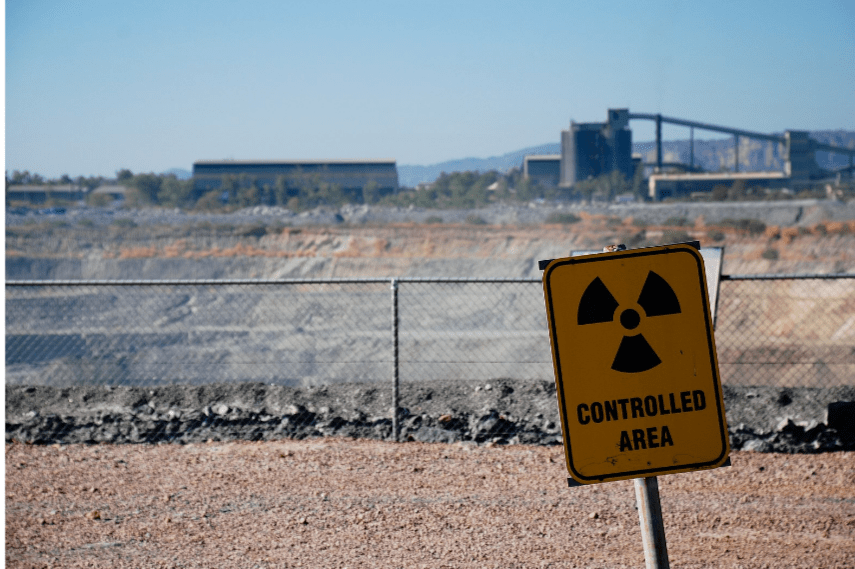
An abandoned uranium mine has been a hazardous waste area for thousands of years
Nuclear power is expensive. Wind power and solar power are up to 15 times cheaper than nuclear power per MWh produced. Disposal of nuclear waste is astronomically expensive. The construction of nuclear power plants is extremely slow, Olkiluoto 3 was built in Finland for almost 20 years. According to the IPCC, the climate crisis must be solved and we must switch to carbon-free energy in 7 years, in order to prevent critical warming, the consequences of which would be catastrophic. The construction of nuclear power plants takes much longer than this 7 years and the uranium reserves will also run out in twenty years, so they are not a sustainable solution, and they cannot even be any kind of solution when viewed from a temporal perspective. In several countries, no new nuclear power plants have been built for decades, e.g. USA, France and Germany. In the United States and France, nuclear power plants are beginning to reach the end of their service life. In Germany, even in 2023, the last nuclear power plants were closed and the use of nuclear power was completely stopped. Many countries, such as Italy and Austria, have never even built their first nuclear power plant. Contrary to claims, nuclear power has not been replaced by coal in Germany, but nuclear power has been replaced by renewable energy, mainly wind and solar power. Up to 30% of Germany’s electricity is produced by wind power alone. New coal-fired power plants are only built to replace old coal-fired power plants, not nuclear power plants.
Germany is the flagship of renewable energy, having replaced all nuclear power and a huge amount of fossil energy with renewable energy. The whole world should pay attention to Germany’s success in the green transition. Besides, nuclear power is not even carbon-free. Machines in uranium mines run on diesel, uranium is packed on diesel ships and diesel trains, machines in the condensing system of nuclear power plants run on diesel. It has been calculated that the carbon emissions of nuclear power are about 30-40% per MWh of the carbon emissions of oil. The share of nuclear power in global energy production is only 2.5%, and its amount cannot be increased precisely because of the limited uranium reserves. The only sustainable solution is renewable energy, which can be obtained without limits.

The introduction of nuclear power has been one of the biggest mistakes in human history. It is expensive, linear, destructive, polluting, deadly, dangerous and pointless. Renewable energy is clean and its potential is unlimited. Every moment, the sun radiates to the earth with such power that it would be possible to satisfy humanity’s energy needs a thousand times over. We are still only using a very small part of the huge potential that renewable energy would make possible for us. Humanity must take steps forward and not get stuck in old, dangerous and polluting technology. The era of nuclear power is over, both the EU and the UN understand this. Only some economic interests and ideological right-wing conservatives want nuclear power, for completely irrational reasons. The only way out of the climate crisis, the only sustainable solution for energy production, is renewable energy, which we can use for thousands and thousands of years. We will be on this globe for thousands or millions of years.
https://www.greenpeace.org/international/story/52758/reasons-why-nuclear-energy-not-way-green-and-peaceful-world/
https://pulitzercenter.org/stories/unending-despair-indias-magical-land
https://theecologist.org/2016/apr/28/uranium-mining-threatens-south-africas-iconic-karoo
https://theecologist.org/2016/mar/30/sacred-land-unholy-uranium-canadas-mining-industry-conflict-first-nations
https://www.ncbi.nlm.nih.gov/pmc/articles/PMC3222290/
http://www.ejolt.org/2015/07/talvivaara-mine-environmental-disaster/
http://www.ydinvoima.org
 Ecoblogi - A Blog by Daniel Elkama
Jätä kommentti