Having just returned from a trip, I want to talk a little about the benefits and drawbacks of travel. This year I have taken a total of two flights in Europe and the Middle East. In the spring, I traveled to Athens to help refugees (e.g. at a refugee camp) and now in August to the island of Cyprus for a fairly ecological holiday trip, where I saw the wonderful nature of the Mediterranean. Last year I traveled by plane to Berlin and by train and bus to Finnish Lapland, Norway and Sweden.
Carbon emissions from air travel account for approximately 2.5% of global climate emissions. Air traffic is therefore not, contrary to what is often thought, the biggest source of climate emissions. However, in recent years it has been somewhat fashionable to be against flying. However, becoming a vegetarian, for example, reduces carbon emissions 10-20 times more than canceling a couple of flights. For example, flights to London and back produce about 200-300 kg of carbon emissions. Instead, a year’s meat consumption produces at least 3,000 kg of emissions. A year’s worth of driving produces the same amount of emissions or even more.
So flying is not necessarily such a big sin. Of course, excessive flying, especially intercontinental, causes considerable emissions and it must definitely be reduced. One Finnish celebrity stated during the COVID-19 time that it saddened her when she could not travel abroad dozens of times a year. I myself always compensate for the carbon released into the air that I create during air travel. This is achieved by supporting environmental projects, such as planting forests. In Finland you can compensate, e.g., through the Compensate foundation, https://compensate.com or through Friends of the Earth. The donation channel of Friends of the Earth is https://lentomaksu.fi and the money donated to it supports e.g. reforestation in Africa. Trees can also be planted through e.g. the Church’s foreign aid. https://toisenlainenlahja.fi If you google ”compensate flights” you will find many options in English. With compensation, quite concretely, approximately the same amount of carbon that is released when flying is bound to growing trees, etc. Compensation is not expensive. Clean hydrogen and electric airplanes can be expected in the future, the development of which is already very advanced. The electric passenger plane has already flown long distances.
My own carbon footprint is less than 3 tons without air travel, and slightly more than 3 tons with air travel. The average carbon footprint of Finns is more than 10 tons of carbon per year. For some, it can be more than 20 tons.
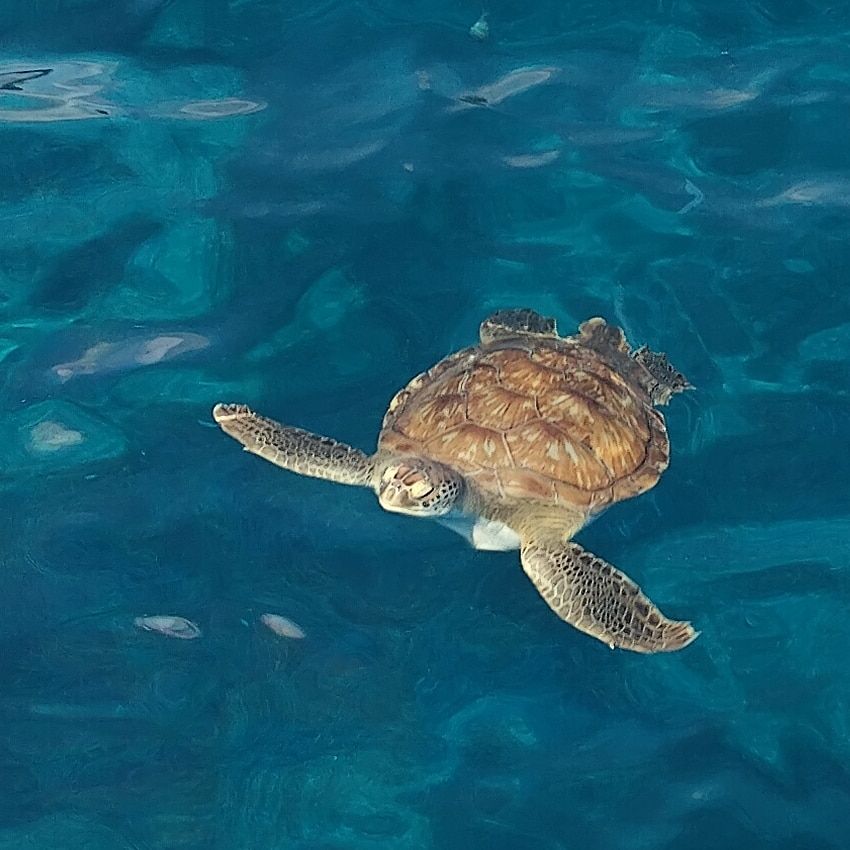
Tourism has saved many endangered species. For example, elephants would have almost disappeared without tourism. Tourism is a big source of money and thanks to it nature reserves are established and endangered species are protected. Tourism is often the biggest reason for the protection of nature and species. I myself got to see endangered sea turtles on my trip to Cyprus. The money received from tourism is very important for the economy of many countries in the Global South, but also in Europe and the well-being of their people. Travel broadens and teaches. It creates global citizenship and unites the world. Tourism can make people conservationists, when people see how wonderful nature is on this globe of ours.
Tourism was still very polluting in the 70s and 80s, garbage and plastic ended up in the sea. Energy and water were consumed without hesitation. Mass tourism created problems. The reality is different now. However, today many hotels run on renewable energy, water and energy are saved, and numerous beaches and other sea areas have been cleaned of plastic and garbage with the money received from tourism. Many destinations, such as the Canary Islands, which are considered tourist hotspots, are full of wonderful nature reserves and national parks, and nature and people live side by side. This was also visible in Cyprus, where right next to the tourist destination of Ayia Napa is the large Cape Greco National Park with rare plants and animals. Tourism doesn’t bother them much. When you act as responsibly as you do at home, the environmental damage will be minimal: you shouldn’t waste water in the shower and you shouldn’t keep the air conditioner on unnecessarily. Eat vegetarian and organic food and prefer low-emission movement. If a region can choose whether to use nature for industry or tourism, then tourism is the better option. Thus, partially thanks to tourism, Lapland’s great natural sites have been preserved in Finland as well. Tourism must be developed to become more ecological all the time, and here the consumer’s (tourist’s) decisions are key issue.


 Ecoblogi - A Blog by Daniel Elkama
Jätä kommentti